


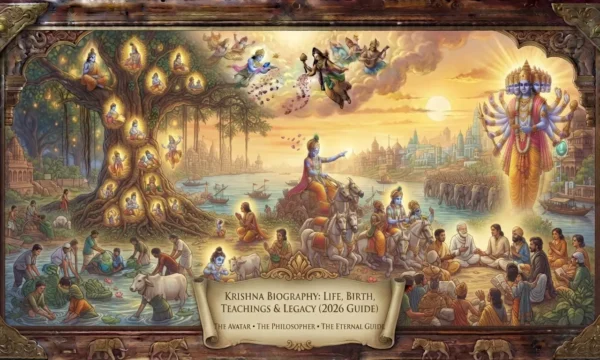



Krishna Biography: The Complete Life Story of Lord Krishna
Lord Krishna is one of the most beloved and widely worshipped deities in Hinduism. Revered as the eighth avatar of Lord Vishnu, Krishna’s life story blends divine mystery with deeply human moments — mischief, friendship, love, war, and wisdom.
Table Of Content
- Who Was Lord Krishna?
- Early Life and Birth of Krishna
- Birth in a Prison Cell
- Childhood in Gokul and Vrindavan
- Krishna’s Return to Mathura and the Fall of Kansa
- The Founding of Dwarka
- Krishna and the Mahabharata
- Friendship With the Pandavas
- The Bhagavad Gita
- Krishna’s Role in the Battle of Kurukshetra
- Family Life of Krishna
- The Final Days of Krishna
- Why Krishna’s Life Story Still Matters Today
- Meaning of Krishna’s Name and His Many Titles
- Krishna’s Role as a Diplomat and Strategist
- Historical and Scholarly Perspectives on Krishna
- Lessons From Krishna’s Life for Modern Readers
- Frequently Asked Questions About Krishna’s Biography
- Conclusion
From his dramatic birth in a Mathura prison cell to his role as Arjuna’s charioteer on the battlefield of Kurukshetra, Krishna’s biography has shaped Indian spirituality, art, music, and philosophy for thousands of years.
This article walks through Krishna’s entire life journey — his birth, childhood, youth, role in the Mahabharata, teachings in the Bhagavad Gita, and final days — in a clear, well-researched, and easy-to-follow format.
Who Was Lord Krishna?
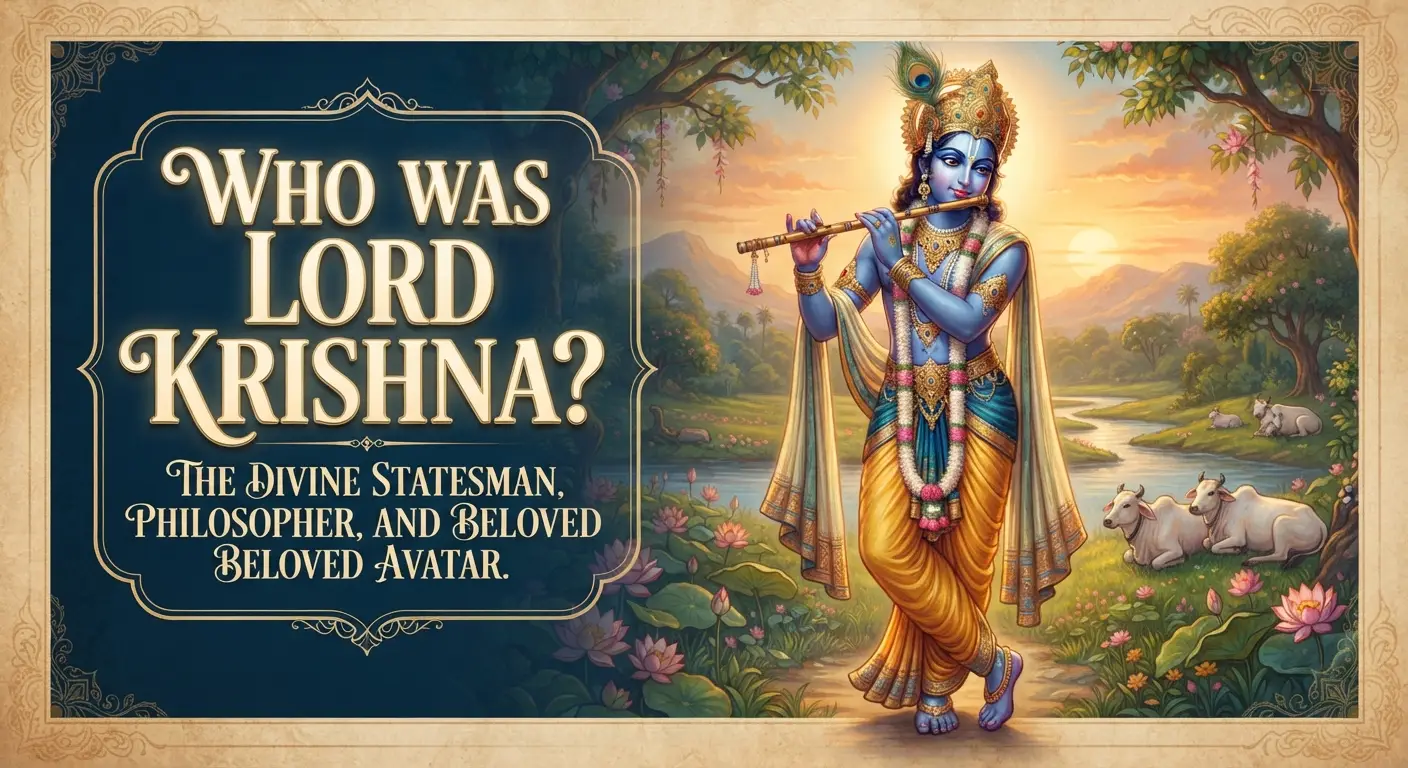
Krishna is worshipped as a supreme deity in Hinduism and is considered the full incarnation (Purna Avatar) of Lord Vishnu. He is central to two of Hinduism’s greatest texts — the Mahabharata and the Bhagavad Gita — and is also celebrated in the Bhagavata Purana and Harivamsa.
Unlike many deities depicted purely in a divine or abstract form, Krishna’s story is told almost like a human biography, complete with a childhood, family relationships, friendships, romantic episodes, political struggles, and a natural death. This is part of what makes his life so relatable and widely studied even today.
Early Life and Birth of Krishna
Birth in a Prison Cell
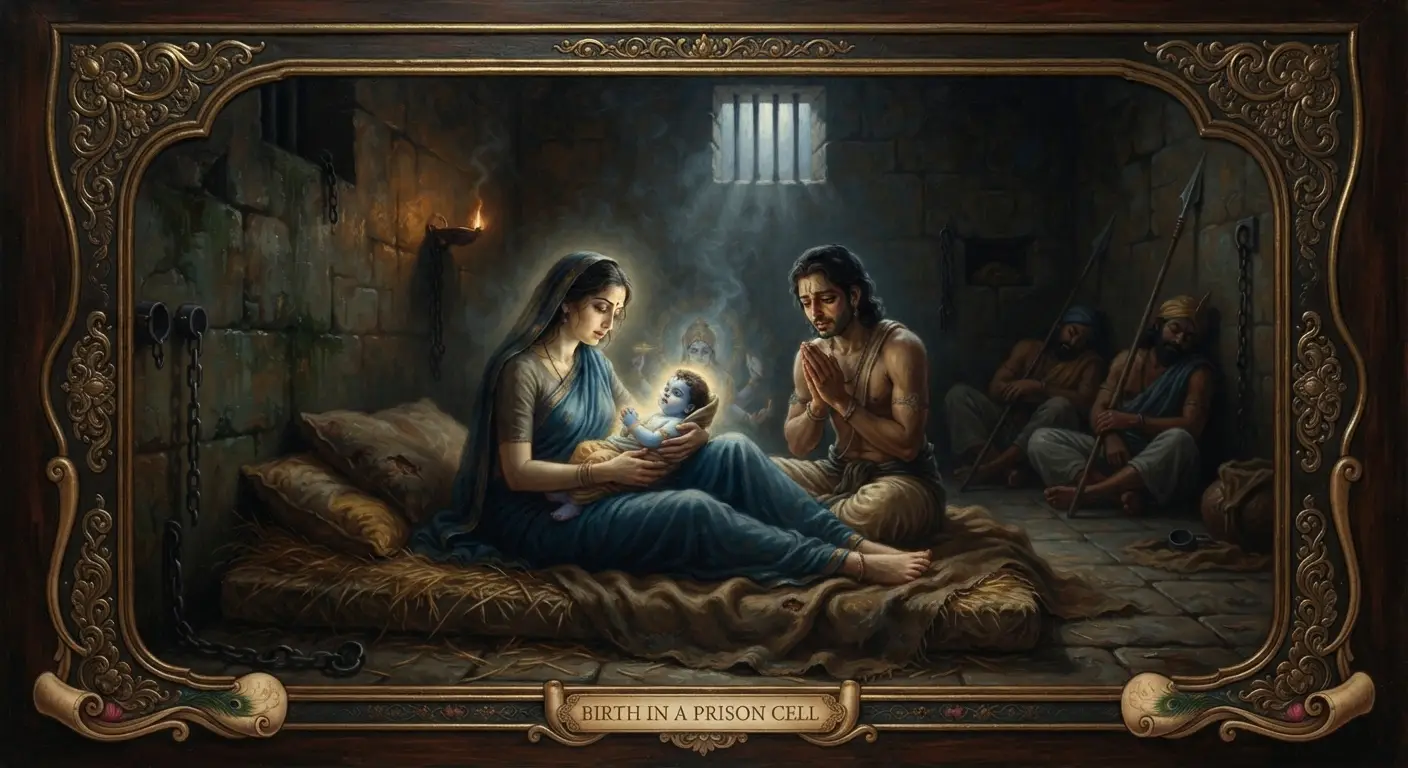
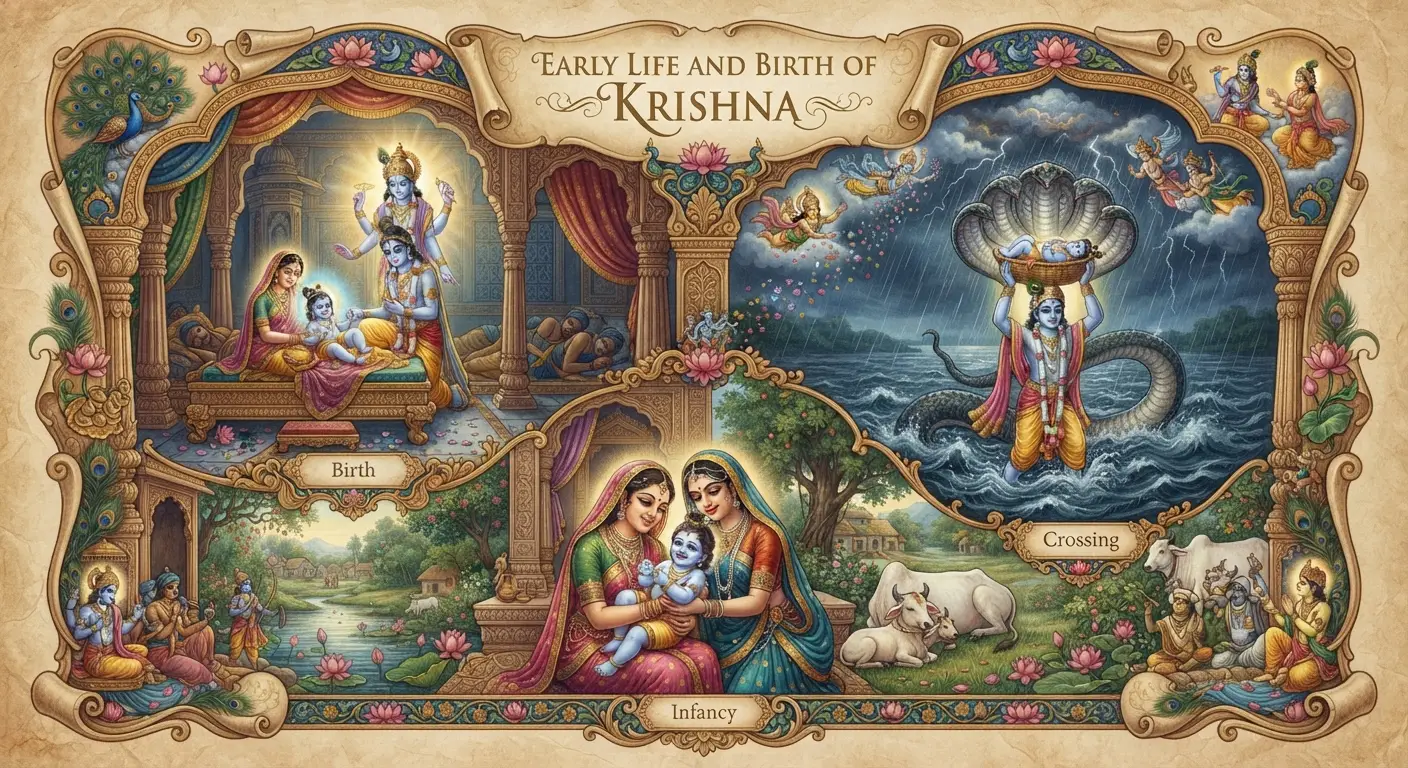
According to Hindu scriptures, Krishna was born at midnight in a prison cell in Mathura to Devaki and Vasudeva. His birth is celebrated every year as Krishna Janmashtami, one of the most important festivals in Hindu tradition.
Krishna’s maternal uncle, King Kansa, had been warned by a divine prophecy that Devaki’s eighth child would be responsible for his death. Fearing this prophecy, Kansa imprisoned Devaki and Vasudeva and killed each of their children as soon as they were born.
When Krishna, the eighth child, was born, a series of miraculous events allowed Vasudeva to secretly carry the infant across the Yamuna river to Gokul, where he exchanged Krishna for the newborn daughter of Nanda and Yashoda. This exchange saved Krishna’s life and set the stage for his upbringing far away from Kansa’s tyranny.
Childhood in Gokul and Vrindavan
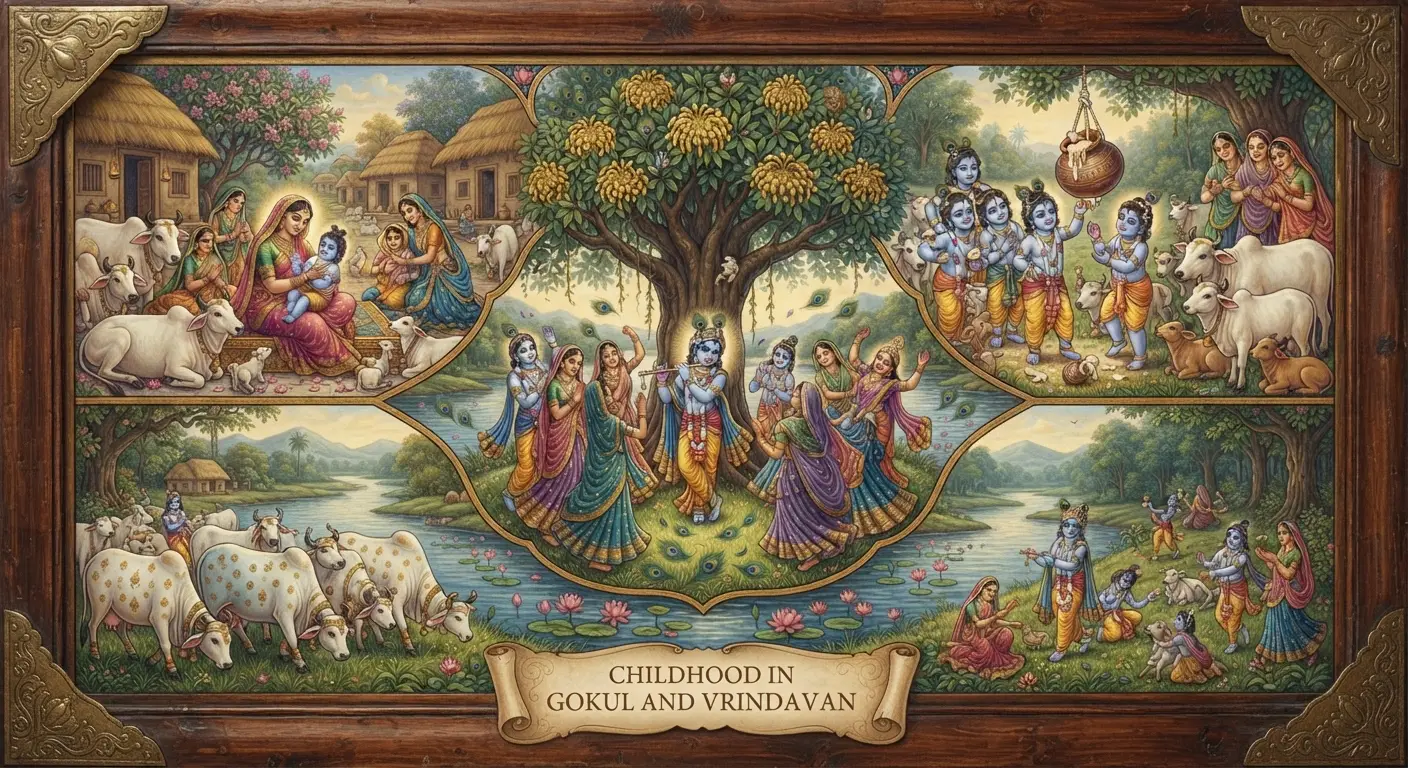
Krishna spent his early childhood in Gokul and later moved to Vrindavan, where he was raised by his foster parents, Nanda and Yashoda. This period of his life is remembered fondly across Indian culture for several reasons:
Playful mischief: Young Krishna was known for stealing butter and milk from neighbours, earning him the affectionate nickname Makhan Chor (butter thief).
Divine feats: Even as a child, he is said to have defeated demons sent by Kansa, including Putana and Trinavarta.
Govardhan Hill: Krishna famously lifted the Govardhan Hill on his finger to shelter villagers from a storm sent by Indra, teaching the community about devotion over fear.
The Raas Leela: His time with the gopis (cowherd maidens) of Vrindavan, especially his bond with Radha, became one of the most celebrated symbols of divine love (bhakti) in Hindu tradition.
This period of Krishna’s biography is often described as the most colourful and emotionally rich part of his life, forming the basis of countless songs, dances, and paintings across India.
Krishna’s Return to Mathura and the Fall of Kansa
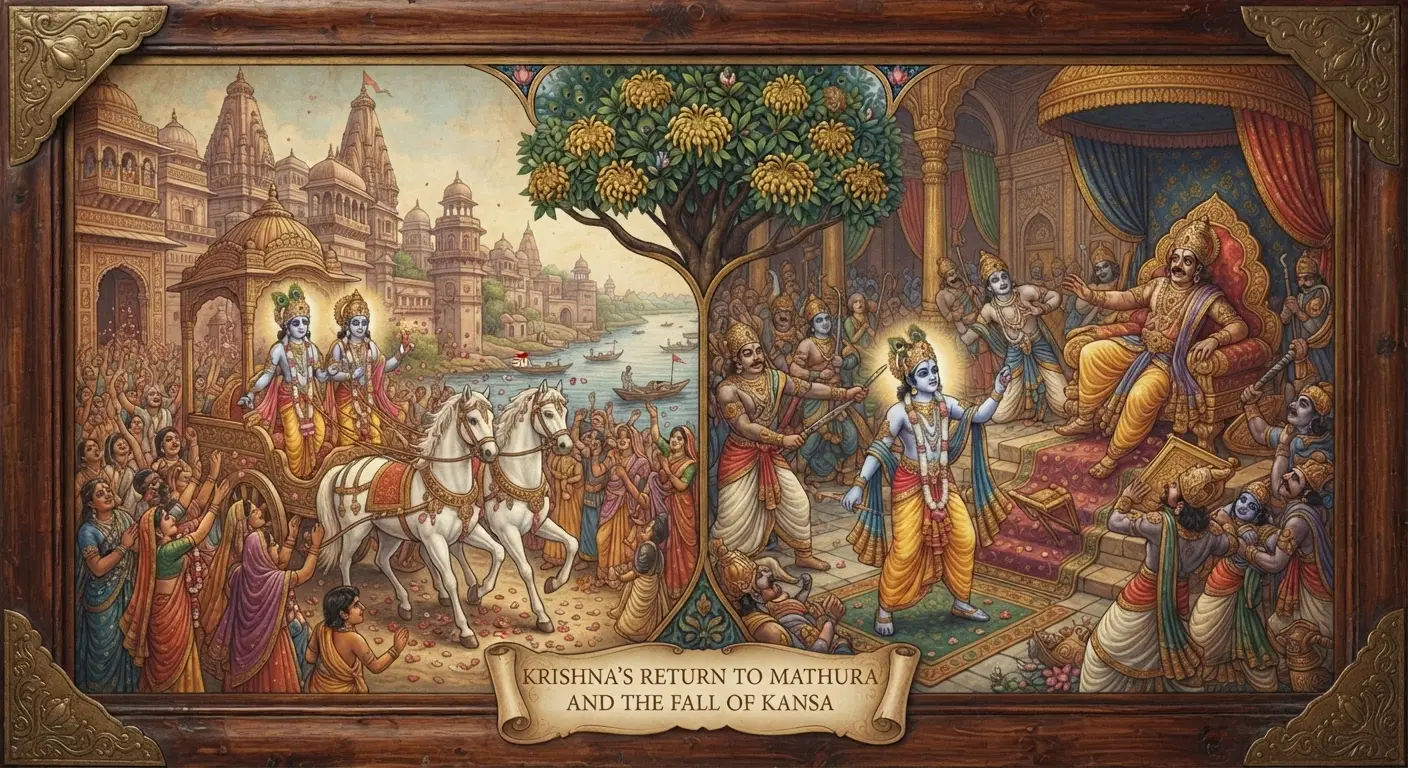
As Krishna grew older, he returned to Mathura along with his brother Balarama. There, he confronted and killed King Kansa, fulfilling the prophecy that had haunted his family since before his birth.
After Kansa’s death, Krishna restored Ugrasena, Kansa’s father, to the throne of Mathura rather than ruling it himself. This act reflected a recurring theme in Krishna’s life story — using his power to restore dharma (righteous order) rather than personal gain.
The Founding of Dwarka
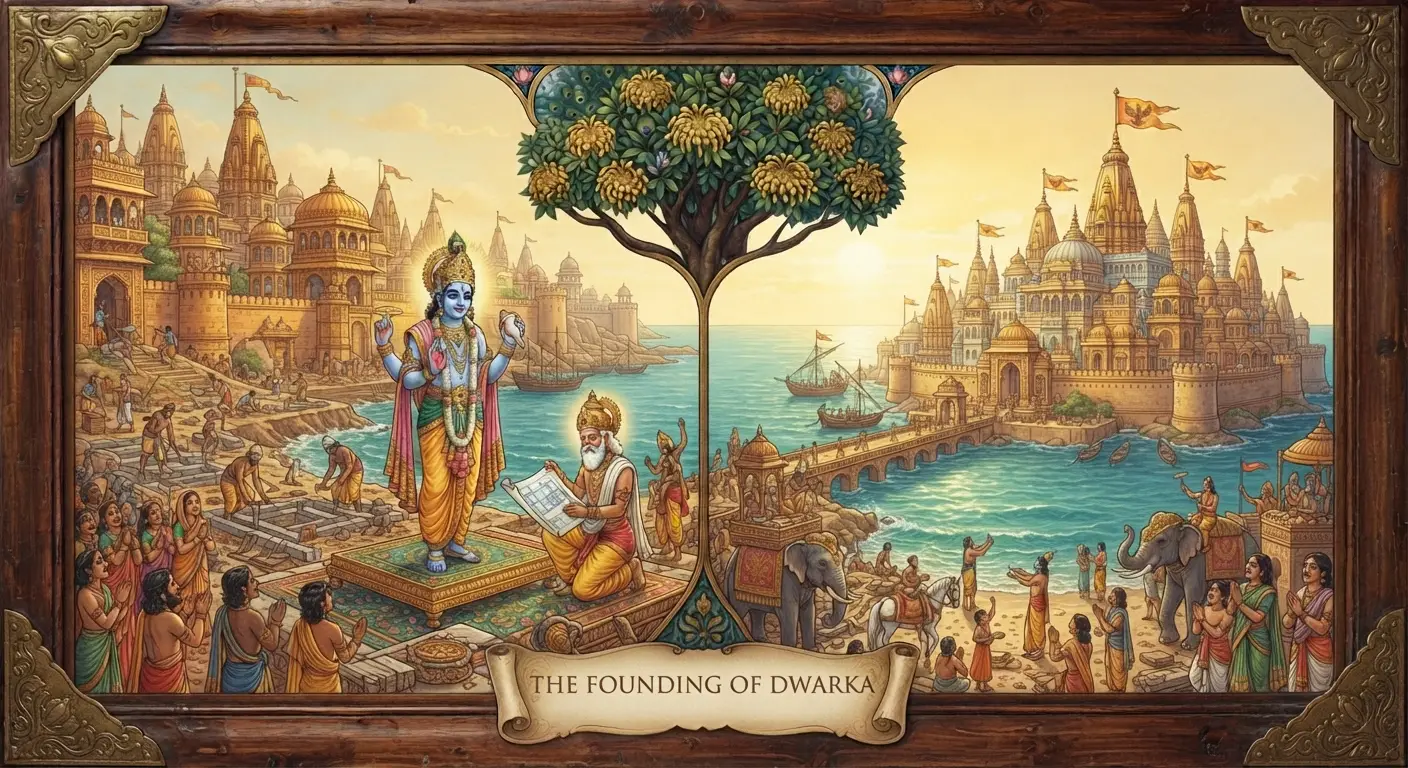
Following repeated conflicts with hostile kings such as Jarasandha, Krishna made a strategic decision to relocate his people from Mathura to a safer coastal region. There, he established the kingdom of Dwarka, which became his primary base for the rest of his life.
Dwarka is significant in Krishna’s biography for several reasons:
It marked his transition from a cowherd prince to a political and military leader.
It became the setting for his marriages, including his union with Rukmini.
Archaeological and marine research near the Gujarat coast has fuelled ongoing interest in the historical roots of the Dwarka legend.
Krishna and the Mahabharata

Friendship With the Pandavas
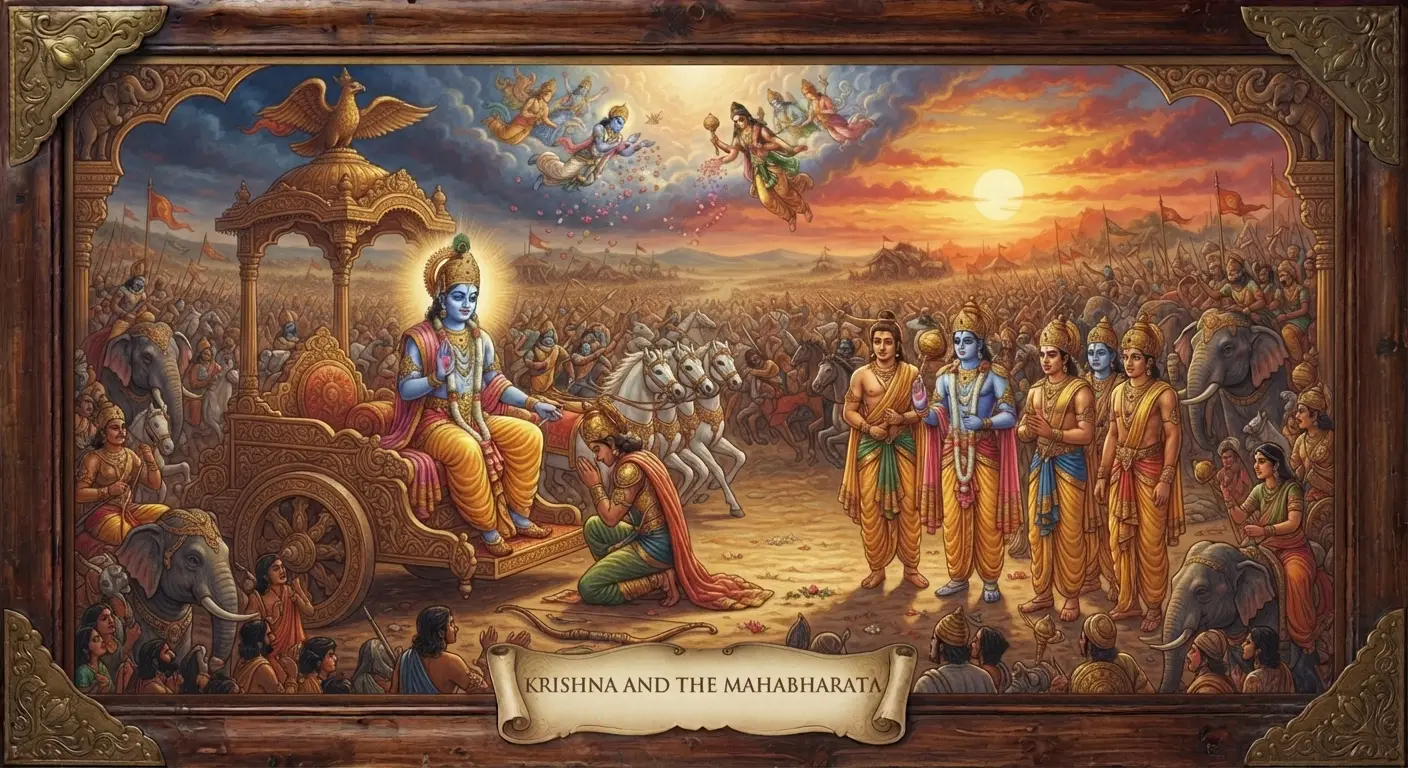
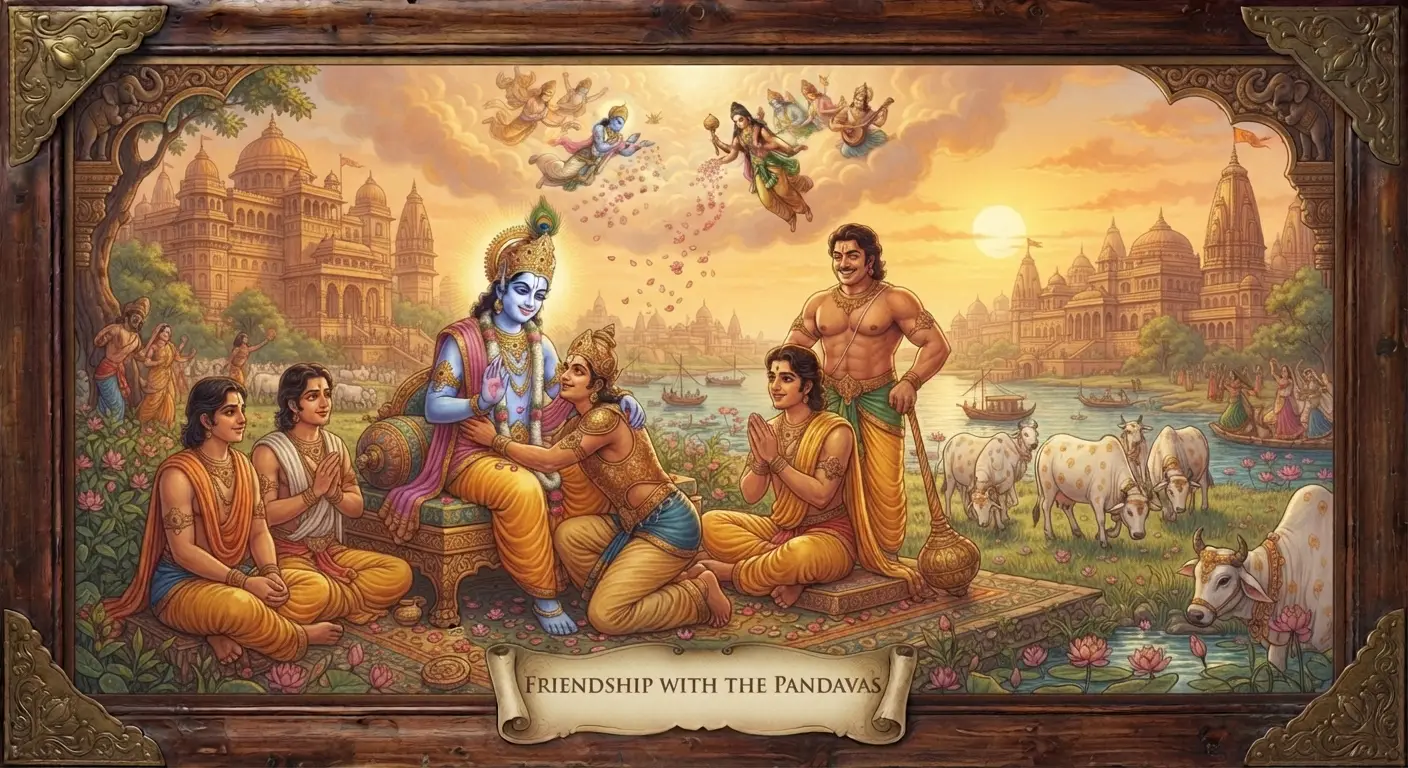
One of the most defining relationships in Krishna’s life was his friendship with the Pandavas, particularly Arjuna. Krishna served as a guide, diplomat, and eventually a charioteer during the events leading up to the great war of Kurukshetra.
When conflict between the Pandavas and Kauravas became unavoidable, Krishna offered both sides a choice: his personal support without weapons, or his army equipped for battle. Duryodhana, representing the Kauravas, chose Krishna’s army. Arjuna, representing the Pandavas, chose Krishna himself — a decision that proved decisive.
The Bhagavad Gita
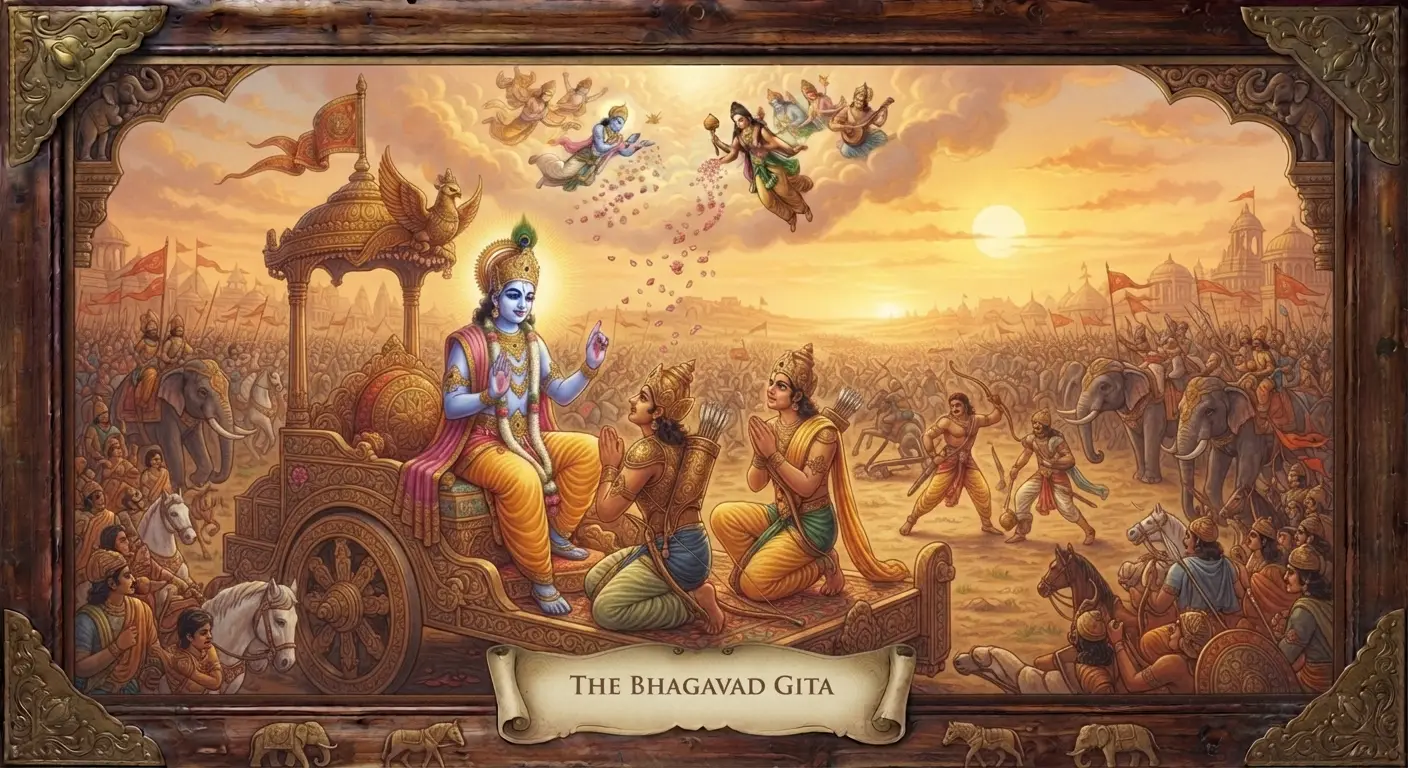
Perhaps the most influential moment in Krishna’s biography occurred on the battlefield of Kurukshetra. As the war was about to begin, Arjuna was overwhelmed with doubt about fighting his own relatives and teachers. Krishna responded with a profound spiritual discourse that later became known as the Bhagavad Gita.
The Gita covers several core philosophical themes, including:
The nature of the soul (Atman) and its immortality
The concept of duty (dharma) without attachment to results
Different paths to spiritual realization — karma yoga (action), bhakti yoga (devotion), and jnana yoga (knowledge)
The revelation of Krishna’s universal form (Vishwarupa) to Arjuna
This teaching is widely studied not just as religious scripture but also as a text on leadership, ethics, and psychology, and continues to influence millions of readers worldwide.
Krishna’s Role in the Battle of Kurukshetra
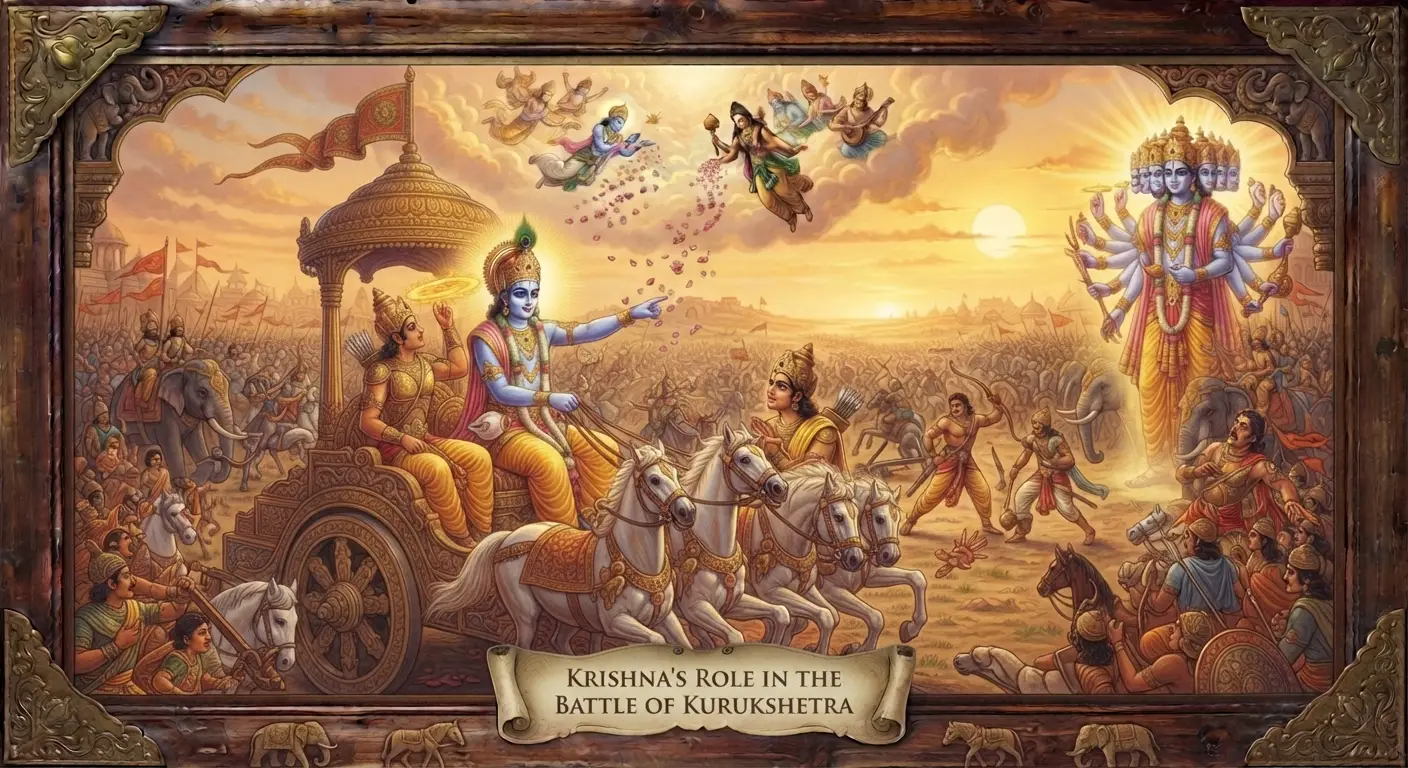
Although Krishna chose not to wield weapons himself during the war, his strategic counsel shaped its outcome at multiple points. As Arjuna’s charioteer, he guided decisions that determined the course of several major confrontations during the eighteen-day battle.
After the war ended, Krishna visited Gandhari, the mother of the Kauravas, who had lost all one hundred of her sons. Grief-stricken, she cursed Krishna, declaring that he and his Yadu clan would meet destruction within thirty-six years — a curse Krishna is said to have accepted without resistance, understanding it as a consequence of the cycle he had helped set in motion.
Family Life of Krishna
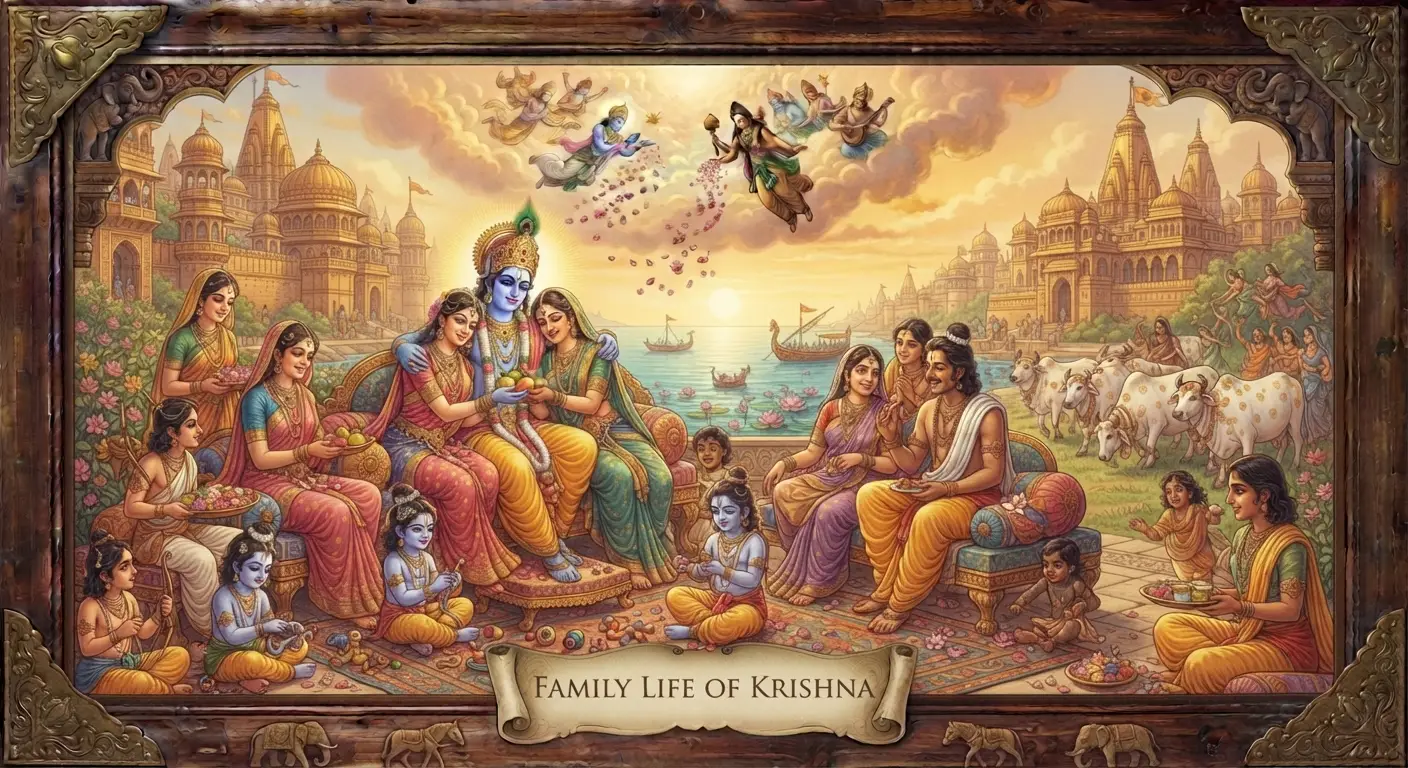
Krishna’s personal life is described in detail in texts like the Bhagavata Purana and Vishnu Purana. Some key points include:
Marriages: Krishna’s most prominent wife was Rukmini, whom he married after she sent him a message asking to be rescued from an unwanted arranged marriage.
Other consorts: Scriptures mention several other wives, including Satyabhama and Jambavati.
Children: Krishna is said to have had numerous sons, the most notable being Pradyumna and Samba.
Family challenges: Despite his wisdom, Krishna’s own sons are described as becoming arrogant over time, eventually contributing to internal conflict within the Yadu dynasty.
The Final Days of Krishna
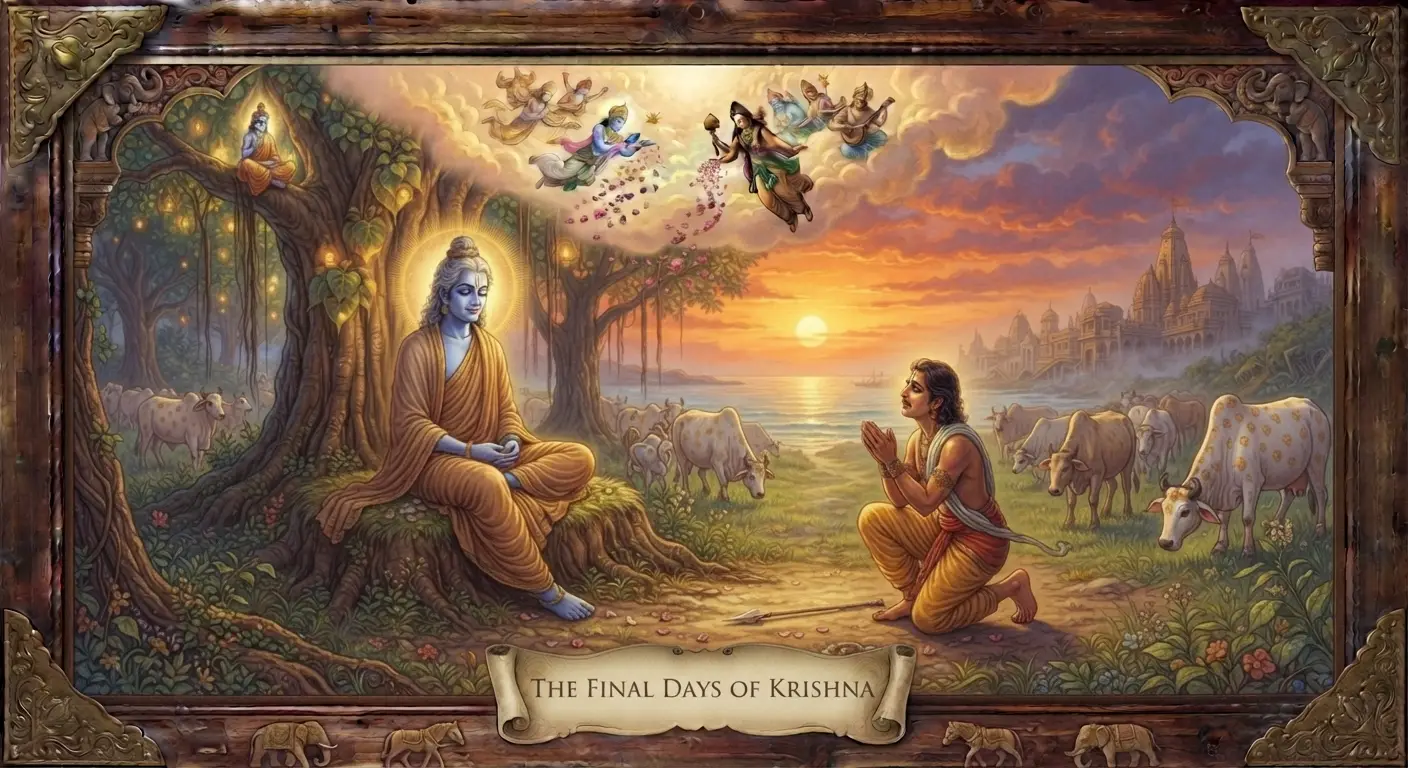
According to the Mahabharata and Bhagavata Purana, Krishna’s final years were marked by internal strife within his own Yadu clan. A curse and a series of unfortunate events led to the clan’s near-total destruction through infighting.
Krishna is said to have eventually retreated into a forest, where he was resting under a tree when a hunter named Jara mistook his foot for an animal and shot an arrow at him. This wound marked the end of Krishna’s earthly life. Even in his final moments, tradition holds that Krishna forgave the hunter, reflecting the compassion that defined much of his life story.
His departure is believed to mark the beginning of the Kali Yuga, the current age described in Hindu cosmology.
Why Krishna’s Life Story Still Matters Today
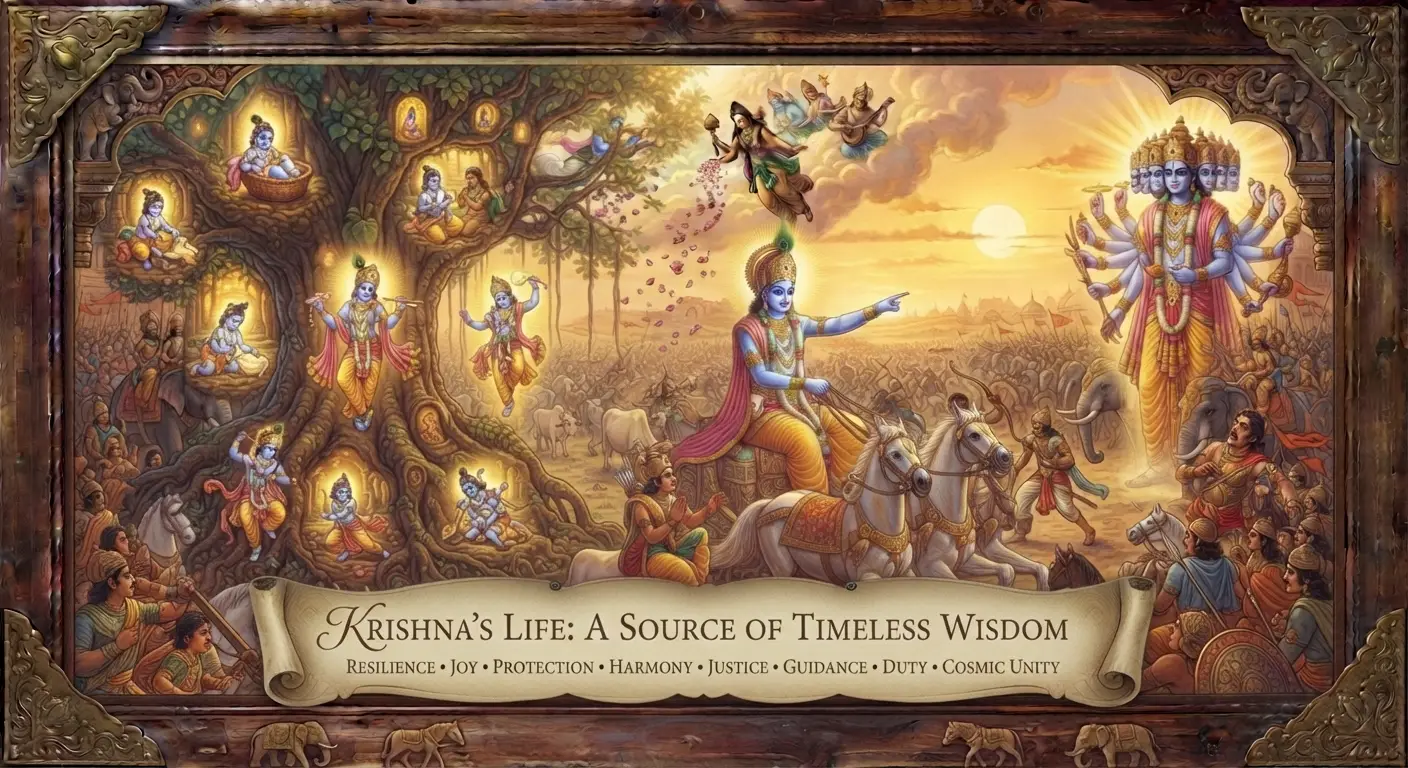
Krishna’s biography is more than a religious narrative — it offers lessons that remain relevant in modern life:
Leadership without ego: Krishna guided kings and warriors without seeking a throne for himself.
Balance of duty and detachment: The Gita’s teachings on acting without obsessing over outcomes are widely applied in modern psychology and management.
Compassion under pressure: From forgiving his killer to protecting villagers, Krishna’s actions consistently prioritized empathy.
Cultural influence: Krishna’s stories continue to shape Indian classical dance, music, literature, temple architecture, and festivals such as Janmashtami and Holi.
Meaning of Krishna’s Name and His Many Titles
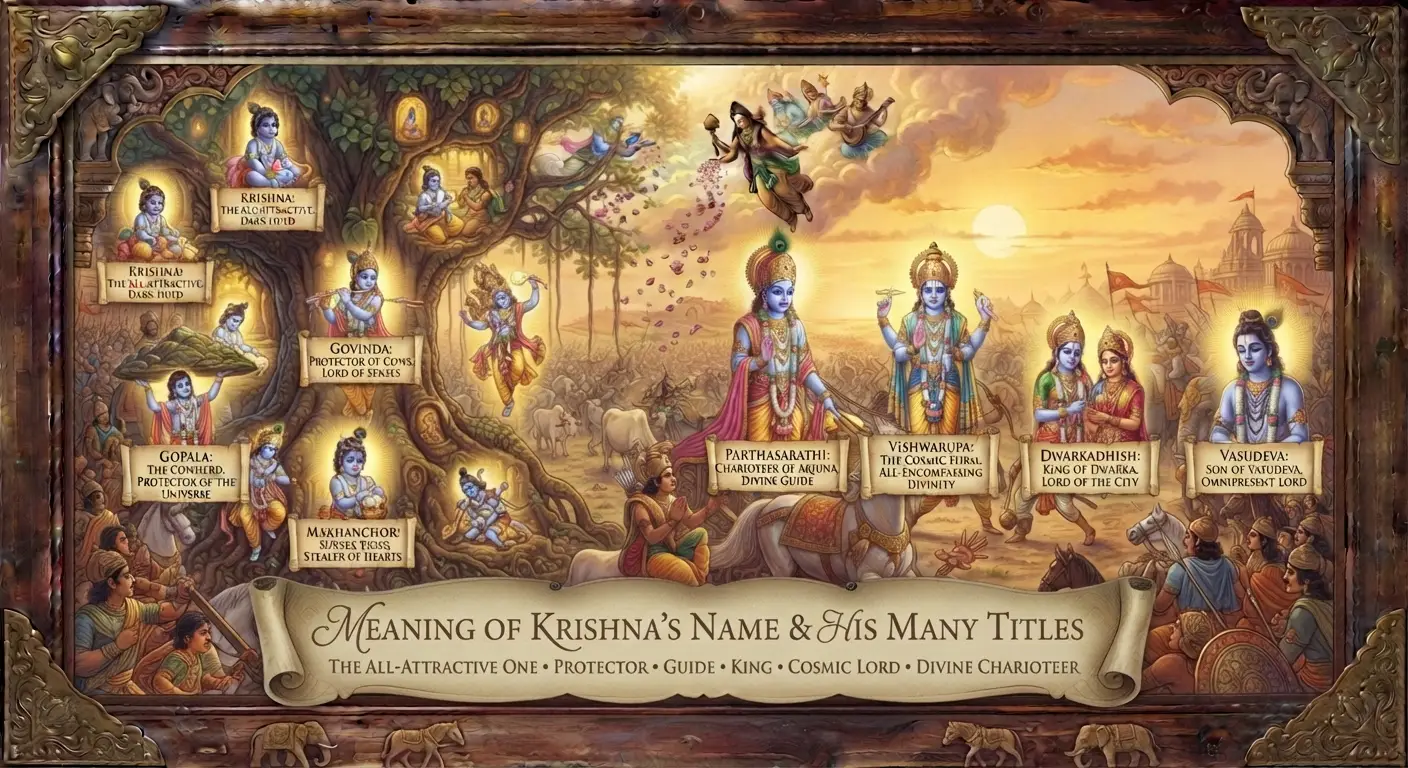
Krishna is known by dozens of names across Hindu texts, each reflecting a different aspect of his personality or life story. Understanding these names helps in appreciating how deeply layered his biography really is.
Govinda – protector of cows, reflecting his cowherd upbringing in Vrindavan
Vasudeva – son of Vasudeva, his biological father
Madhava – husband of Lakshmi, connecting him to Vishnu’s consort
Keshava – slayer of the demon Keshi
Mohan – the enchanting one, referring to his charm and charisma
Shyam / Shyamsundar – referring to his dark or blue-hued complexion
Murlidhar – the one who holds the flute, a defining image in Krishna’s iconography
Each of these names is tied to a specific episode or trait from Krishna’s life, which is why devotional
literature often uses them interchangeably depending on which part of his story is being narrated.
Krishna’s Role as a Diplomat and Strategist
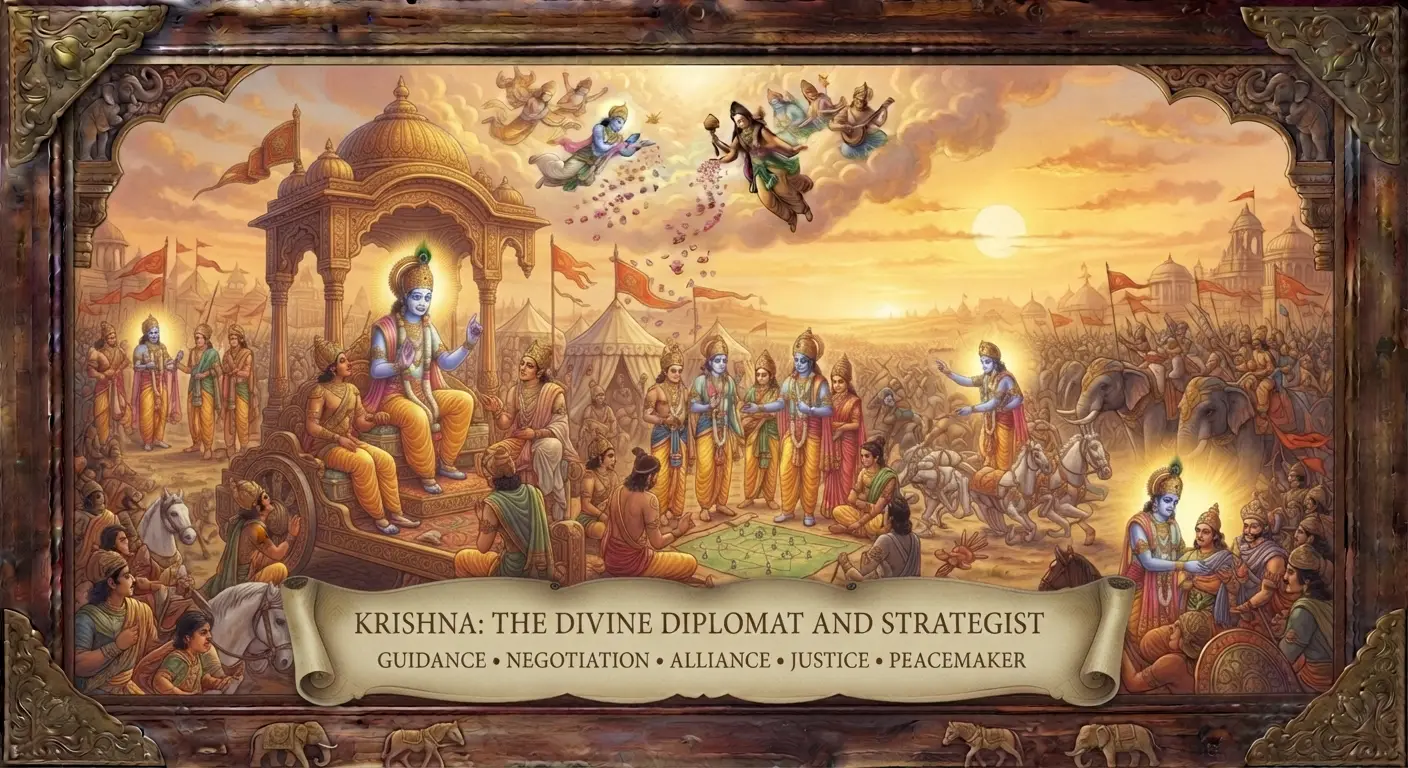
Beyond his spiritual identity, Krishna’s biography also presents him as a skilled diplomat. Before the Kurukshetra war began, he personally travelled to the Kaurava court as a peace envoy on behalf of the Pandavas, attempting to prevent the conflict altogether.
During this mission, known as the Shanti Doot episode, Krishna proposed a modest settlement — asking for just five villages for the five Pandava brothers instead of their full share of the kingdom. When Duryodhana refused even this compromise, war became unavoidable.
His strategic thinking also appeared repeatedly during the war itself, where his counsel to the Pandavas influenced several turning points, always framed within the broader goal of restoring dharma rather than personal glory.
Historical and Scholarly Perspectives on Krishna
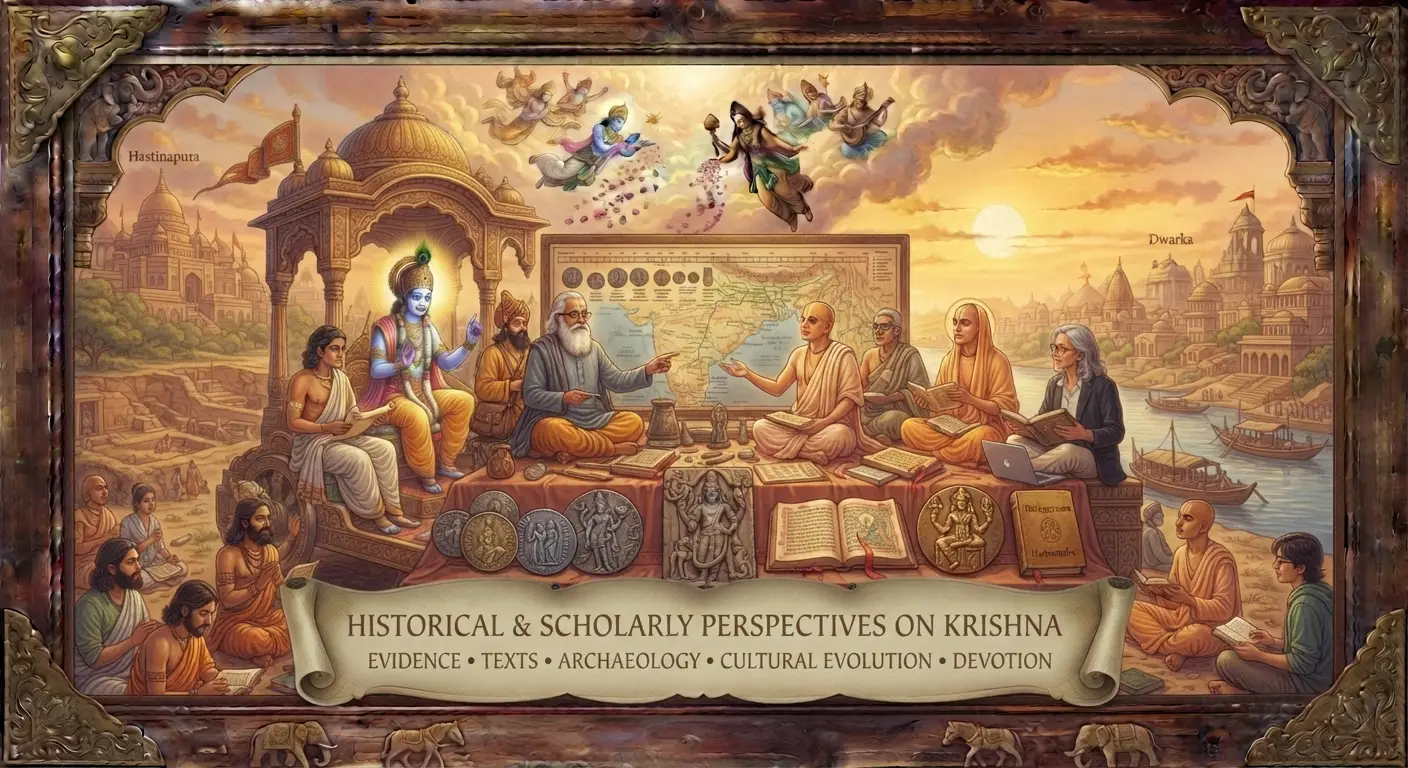
While Krishna is primarily known through religious texts, scholars have also examined his story from archaeological and textual perspectives. Excavations near the Gujarat coastline, linked to submerged ruins believed to be ancient Dwarka, have generated academic interest, though conclusions remain debated.
Textual scholars note that Krishna’s character in the Rigveda appears in a more limited form, while his fuller biography develops later in texts like the Harivamsa and Bhagavata Purana — expanded over centuries through oral tradition and the Bhakti movement (6th–16th centuries CE). This doesn’t diminish his spiritual significance; it shows how his story has been continuously enriched by generations of devotees and poets.
Lessons From Krishna’s Life for Modern Readers
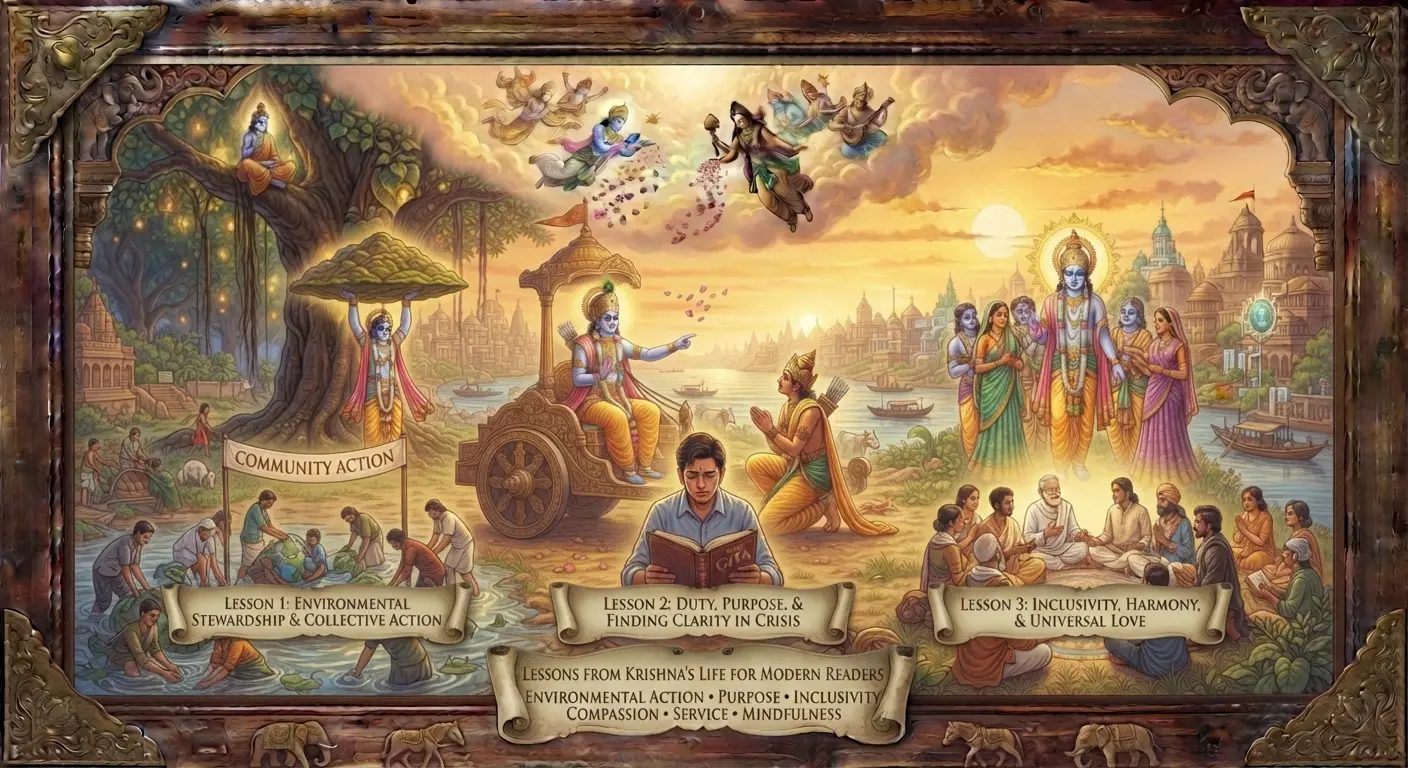
Even outside a religious context, several themes from Krishna’s biography translate into practical takeaways:
Adaptability: Krishna moved between roles — cowherd, prince, diplomat, warrior’s guide, and teacher — without losing his core values.
Calm decision-making: His counsel during the Mahabharata war reflects clarity under extreme pressure.
Service over status: He restored Ugrasena to the throne instead of ruling Mathura himself.
Emotional resilience: His response to Gandhari’s curse shows acceptance rather than resistance to consequences.
Balanced living: The Gita’s teachings encourage engagement with responsibilities while maintaining inner detachment from outcomes.
These lessons are one reason Krishna’s biography is studied not only by religious scholars but also by readers interested in leadership, philosophy, and personal growth.
Frequently Asked Questions About Krishna’s Biography
Where was Krishna born?
Krishna was born in a prison cell in Mathura, in present-day Uttar Pradesh, India.
Who were Krishna’s real parents?
His biological parents were Devaki and Vasudeva, though he was raised by foster parents Yashoda and Nanda in Gokul.
Why is Krishna considered an avatar of Vishnu?
Hindu scriptures describe Krishna as a Purna Avatar, a complete incarnation of Lord Vishnu, sent to restore dharma on earth.
What is Krishna’s connection to the Bhagavad Gita?
Krishna delivered the Bhagavad Gita to Arjuna on the Kurukshetra battlefield, offering spiritual guidance before the war began.
How did Krishna die?
According to scripture, Krishna’s earthly life ended when a hunter named Jara accidentally shot him with an arrow while he rested in a forest.
What is Krishna Janmashtami?
Janmashtami is the annual festival that celebrates Krishna’s birth, observed with fasting, devotional singing, and midnight prayers.
How old was Krishna when he died?
Scriptures state that Krishna lived to around 125 years before departing from his physical form.
Conclusion
Krishna’s biography is a remarkable blend of divinity and humanity — a story that moves from a hidden birth in a prison cell to a mischievous childhood in Vrindavan, and from political strategy in Dwarka to timeless spiritual teaching on the battlefield of Kurukshetra. His life continues to inspire devotion, philosophical reflection, and cultural celebration across the world.
Whether approached as a religious figure, a philosophical teacher, or a historical-mythological character, Krishna’s story offers lessons in duty, compassion, and inner balance that remain deeply relevant even in the modern world.
Emma Carter is a social media content writer and Instagram enthusiast who loves creating creative, stylish, and unique bio ideas. She helps Instagram users find the perfect words to express their personality, mood, style, and vibe.
At Bios4IG, Emma shares fresh Instagram bio ideas, captions, and profile inspiration designed to make your Instagram profile stand out.


No Comment! Be the first one.